
Your complete guide to SSC JE 2026
Junior Engineer in Civil, Mechanical & Electrical — salary, job profile, departments, perks, lifestyle and everything you need, sourced directly from the SSC JE 2025 Official Notification and ssc.gov.in.
SSC General Awareness Batch 2026–27
Score the 100 non-engineering marks in JE Paper 1 with structured GA preparation. Lifetime access.
✓ SSC JE 2025–26 Cycle: Notification was officially released on 30 June 2025 for 1,731 vacancies (revised from initial 1,340 vacancies — per official SSC notice). Tier 1 (Paper 1) was conducted by SSC. Tier 2 (Paper 2) and final result dates are to be announced by SSC.
⏳ SSC JE 2026–27 (Upcoming): Per the official SSC Tentative Calendar of Examinations 2026–27, the SSC JE 2026 Notification dates will be confirmed by SSC. Stay tuned to ssc.gov.in for the official announcement.
◆Table of Contents
- What is SSC JE?
- SSC JE 2025 Cycle Summary
- Important Dates — 2026
- Eligibility Criteria
- Post-wise Age Limit
- Age Relaxation
- Posts, Salary & Lifestyle
- Exam Pattern
- Detailed Syllabus
- Disciplines & Departments
- How to Apply
- Application Fee
- Regional Offices
- Selection Process
- Preparation Tips
- Frequently Asked Questions
What is SSC JE?
The Staff Selection Commission Junior Engineer Examination (SSC JE) is a national-level recruitment exam conducted annually by the Staff Selection Commission (SSC) under the Department of Personnel and Training (DoPT), Government of India. SSC JE recruits eligible engineers for the post of Junior Engineer in three disciplines — Civil, Mechanical, and Electrical — across various central government Ministries, Departments, and Organisations.
SSC JE is one of the most sought-after exams for engineering graduates and diploma holders, offering a stable Group B (Non-Gazetted) government position with attractive 7th Pay Commission salaries (Pay Level 6) and the opportunity to contribute to nation-building through key infrastructure organisations like CPWD, BRO, MES, and CWC.
SSC JE 2025 cycle official summary
Verified milestones from the SSC JE 2025 Official Notification:
| Event | Date / Data (Per Official Notification) |
|---|---|
| Notification Released | 30 June 2025 |
| Online Application Start Date | 30 June 2025 |
| Application Last Date | 21 July 2025 |
| Last Date for Online Fee Payment | 22 July 2025 |
| Window for Application Form Correction | 1 August 2025 to 2 August 2025 |
| Tier 1 (Paper 1) — Originally Scheduled | 27 to 31 October 2025 |
| Total Tentative Vacancies (Revised) | 1,731 posts (revised, per official SSC notice) |
| Age Cut-off Date | 1 January 2026 |
| Disciplines | Civil, Mechanical, Electrical Engineering |
Important dates SSC JE 2026
Per the SSC Tentative Calendar of Examinations 2026–27, the SSC JE 2026 Notification dates will be announced. Final dates will be confirmed in the official notification PDF at ssc.gov.in.
| Event | Status / Date |
|---|---|
| Official Notification | ⏳ To be released per SSC Calendar 2026–27 |
| Online Application Opens | With notification |
| Application Last Date | Approximately 21 days after notification |
| Age Cut-off Date | To be confirmed in upcoming notification (historically 1 January) |
| Tier 1 Exam (Paper 1 — CBT) | Per SSC Calendar 2026–27 |
| Tier 2 Exam (Paper 2 — CBT) | After Tier 1 result |
| Document Verification | After Tier 2 result |
| Medical Examination | Final stage |
SSC General Awareness Batch 2026–27
Covers everything JE Paper 1 GA tests — History, Polity, Geography, Economics & Science. Lifetime access.
SSC Static GK Batch 2026–27
History, Polity, Geography, Economics & Science taught from scratch — foundation for the GA section.
Eligibility criteria
A. Nationality (Per Official Notification)
A candidate must be one of the following:
- A citizen of India
- A subject of Nepal or Bhutan
- A Tibetan refugee who came to India before 1 January 1962 with the intention of permanently settling in India
- A person of Indian origin who has migrated from Pakistan, Burma, Sri Lanka, or East African countries with the intention of permanently settling in India
B. Educational Qualification (Per Official Notification)
| Discipline | Required Qualification |
|---|---|
| Junior Engineer (Civil) | Diploma in Civil Engineering OR Degree (B.E. / B.Tech) in Civil Engineering from a recognised institute |
| Junior Engineer (Mechanical) | Diploma in Mechanical Engineering OR Degree (B.E. / B.Tech) in Mechanical Engineering from a recognised institute |
| Junior Engineer (Electrical) | Diploma in Electrical Engineering OR Degree (B.E. / B.Tech) in Electrical Engineering from a recognised institute |
Post-wise age limit
SSC JE has different age limits depending on the recruiting department. The age cut-off date for the 2025 cycle was 1 January 2026.
| Post | Department | Age Limit |
|---|---|---|
| Junior Engineer (Civil) | Central Public Works Department (CPWD) | Up to 32 Years |
| Junior Engineer (Electrical) | Central Public Works Department (CPWD) | Up to 32 Years |
| Junior Engineer (Civil/Mechanical/Electrical) | All other departments (BRO, MES, CWC, etc.) | Up to 30 Years |
| Detail | Specification (Per 2025 Notification) |
|---|---|
| Age Cut-off Date (2025 Cycle) | 1 January 2026 |
| DOB Range — Up to 30 Years posts | Born not before 02 January 1996 and not later than 01 January 2008 |
| DOB Range — Up to 32 Years (CPWD) posts | Born not before 02 January 1994 and not later than 01 January 2008 |
| Age Cut-off Date (2026 Cycle) | To be confirmed in upcoming notification |
Category-wise age relaxation
| Category | Relaxation in Upper Age Limit |
|---|---|
| SC / ST | Plus 5 Years |
| OBC (Non Creamy Layer) | Plus 3 Years |
| PwBD (Unreserved or General) | Plus 10 Years |
| PwBD (OBC) | Plus 13 Years |
| PwBD (SC / ST) | Plus 15 Years |
| Ex-Servicemen (ESM) | 3 Years after deduction of military service rendered |
| Departmental Candidates | As per Government of India rules |
Posts, salary, job profile, perks & lifestyle
This section gives you a complete picture of life after getting selected through SSC JE — from salary breakdown to discipline-specific job responsibilities, department-specific allowances, perks, career growth, and lifestyle expectations.
7.1 Pay Scale (Per Official Notification)
Per the SSC JE 2025 Official Notification, all three disciplines (Civil, Mechanical, Electrical) are placed under Pay Level 6 of the 7th Pay Commission. The basic pay scale is the same across disciplines — what differs is the recruiting department, job profile, posting location, and department-specific allowances (especially for tough postings like BRO and MES).
| Post | Classification | Pay Level / Scale |
|---|---|---|
| Junior Engineer (Civil) | Group B (Non-Gazetted) | Level 6 Rs. 35,400 to Rs. 1,12,400 |
| Junior Engineer (Mechanical) | Group B (Non-Gazetted) | Level 6 Rs. 35,400 to Rs. 1,12,400 |
| Junior Engineer (Electrical) | Group B (Non-Gazetted) | Level 6 Rs. 35,400 to Rs. 1,12,400 |
Allowances Breakdown (As per 7th Pay Commission)
In addition to the basic pay specified in the official notification, employees receive the following allowances. These allowances significantly increase the in-hand salary above the basic pay figure.
| Allowance | Details |
|---|---|
| Dearness Allowance (DA) | Approximately 58 percent of basic pay (as of 2025–26). Revised twice a year by Government of India to offset inflation. |
| House Rent Allowance (HRA) | X-class cities (e.g. Delhi, Mumbai, Bengaluru): 27 percent of basic pay. Y-class cities: 18 percent. Z-class cities: 9 percent. (HRA gets revised when DA crosses certain thresholds — current rates may have been revised upward.) |
| Transport Allowance (TA) | X-class and higher TPTA cities: Rs. 3,600 plus DA on TA. Other cities: Rs. 1,800 plus DA on TA. Higher rates for officers in higher pay levels. |
| Other Standard Allowances | Children Education Allowance (CEA), Leave Travel Concession (LTC), Special Compensatory Allowance (location-based), and post-specific allowances per official rules. |
7.3 Department-Specific Special Allowances
Beyond standard 7th Pay Commission allowances, SSC JE posts come with department-specific special allowances:
| Department | Special Allowances |
|---|---|
| CPWD (Central Public Works Department) | Standard 7th CPC allowances. Postings typically in urban centres (Delhi, state capitals, major cities), so HRA is generally at X-class or Y-class rates |
| BRO (Border Roads Organisation) | Special Compensatory Allowance for remote / border / hardship areas. Risk allowance for high-altitude and operational areas. Free / subsidised accommodation at remote field stations. BRO recruits MALE candidates only per official notification |
| MES (Military Engineer Services) | Field allowance for military station postings. Some postings get hardship allowance based on location classification (peace area / field area) |
| CWC (Central Water Commission) | Standard allowances. Some postings at remote dam / irrigation project sites get site-specific allowances |
| Department of Posts (DoP) | Standard allowances. Postings in postal circles across India |
| FBP (Farakka Barrage Project) | Site allowance for project location. Government accommodation typically provided |
7.4 Approximate In-Hand Salary by Department and Location
Estimates of monthly in-hand salary at entry level (basic + DA + HRA + TA + special allowances, after standard NPS and CGEGIS deductions). Actual amounts vary based on specific posting, current DA rate, and individual circumstances.
| Department / Location | X-Class City | Y-Class City | Z-Class / Remote |
|---|---|---|---|
| CPWD — Urban posting (Delhi, Mumbai, etc.) | Approx. Rs. 56,000 - 62,000 | Approx. Rs. 51,000 - 57,000 | Approx. Rs. 48,000 - 53,000 |
| BRO — Border / Remote posting | Not applicable (BRO is field-only) | Not applicable (BRO is field-only) | Approx. Rs. 60,000 - 72,000 (with hardship and risk allowances) |
| MES — Military station posting | Approx. Rs. 56,000 - 63,000 | Approx. Rs. 52,000 - 58,000 | Approx. Rs. 50,000 - 65,000 (with field allowance at field-area stations) |
| CWC — Project / Office posting | Approx. Rs. 56,000 - 60,000 | Approx. Rs. 51,000 - 55,000 | Approx. Rs. 48,000 - 52,000 |
7.5 Job Profile by Discipline (What you actually do)
Junior Engineer (Civil)
Civil JEs work on construction, maintenance, and inspection of infrastructure across central government departments. Typical responsibilities include: site supervision of construction projects (buildings, roads, bridges, dams), preparing estimates and BoQs (Bill of Quantities), quality control of construction materials, surveying and levelling, technical drawing review, contractor management, billing and measurement of completed work, ensuring compliance with Indian Standards (IS codes) and CPWD specifications. Civil JEs in CPWD work on government buildings (offices, residential quarters, public infrastructure). Civil JEs in BRO build strategic roads in border areas including high-altitude regions. Civil JEs in MES build and maintain military cantonments. Civil JEs in CWC work on dams, canals, and water resource projects.
Junior Engineer (Mechanical)
Mechanical JEs handle machinery, HVAC systems, plumbing, and mechanical equipment across departments. Typical responsibilities include: maintenance of mechanical systems (generators, pumps, compressors, lifts, escalators), installation and commissioning of HVAC (Heating, Ventilation, Air Conditioning) systems in government buildings, supervision of mechanical contractor work, fault diagnosis and repair of equipment, preparing maintenance schedules, ensuring compliance with safety norms. Mechanical JEs in CPWD handle building services (lifts, AC plants, sanitary systems). Mechanical JEs in BRO maintain heavy construction machinery (graders, excavators, bulldozers). Mechanical JEs in MES manage military workshops and equipment.
Junior Engineer (Electrical)
Electrical JEs handle electrical installations, power distribution, and electrical equipment maintenance. Typical responsibilities include: design and supervision of electrical installations in government buildings (lighting, power distribution, sub-stations, transformers), maintenance of electrical equipment, fault rectification, energy audits, ensuring compliance with Indian Electricity Rules and BIS standards, supervision of electrical contractors. Electrical JEs in CPWD handle building electrical systems and sub-stations. Electrical JEs in BRO handle electrification at border outposts and field accommodations. Electrical JEs in MES handle military station power systems.
Department-Specific Work Environments
- CPWD: Office-cum-site work in urban centres. Mix of design office and field site supervision. Typically Monday-Friday or Monday-Saturday office hours plus site visits
- BRO: Predominantly field-based at construction sites in remote / border / high-altitude areas. Living conditions are often basic at field stations. MALE only per official notification
- MES: Posted at military cantonments across India. Supports Army, Navy, Air Force engineering needs. Mix of cantonment office work and site supervision
- CWC: Project-based work at dam sites, river basins, and the central head office in Delhi. Office work with periodic field visits
Perks, Benefits & Job Security
Beyond salary and allowances, SSC JE employees enjoy substantial benefits that make government jobs highly attractive:
Health & Insurance Benefits
- Central Government Health Scheme (CGHS): Comprehensive medical coverage for the employee, spouse, and dependent family members at empanelled hospitals.
- Central Government Employees Group Insurance Scheme (CGEGIS): Mandatory life insurance with savings component, deducted monthly from salary.
- Reimbursement of medical expenses for treatments not covered under CGHS, as per applicable rules.
Leave Entitlements
- Earned Leave (EL): 30 days per year, encashable at retirement.
- Casual Leave (CL): 8 days per year for short personal needs.
- Half Pay Leave (HPL): 20 days per year for medical or extended personal reasons.
- Maternity Leave (Women): 180 days as per Government of India rules.
- Paternity Leave (Men): 15 days within 6 months of child birth.
- Child Care Leave (Women): Up to 730 days during entire service for child care.
Retirement & Long-term Benefits
- National Pension System (NPS): 10 percent of basic plus DA contributed by employee, matched by 14 percent contribution from Government. Builds substantial retirement corpus.
- Gratuity: Lump sum amount payable at retirement based on years of service.
- Leave Encashment: Earned leave balance encashed at retirement.
- Pension benefits as per applicable rules at the time of retirement.
Other Benefits
- Job Security: Government jobs offer lifetime employment security with stable career progression.
- Leave Travel Concession (LTC): Reimbursement for travel within India once every 2 years (Hometown LTC) or once every 4 years (Anywhere in India LTC).
- Annual Increments: 3 percent increment on basic pay every year on the prescribed date.
- Festival Advance and Other Loans: Available at concessional rates as per government rules.
- Easy Bank Loans: Banks readily extend home loans, personal loans, and vehicle loans to government employees at preferential rates.
7.7 Career Growth & Promotions
SSC JE offers structured career progression. While initial promotion takes time, the long-term career path is rewarding:
General Career Path
Junior Engineer (Level 6) to Assistant Engineer (Level 7, after 8-12 years through seniority and departmental exam) to Executive Engineer (Level 11, after another 10+ years and additional examination) to Superintending Engineer (Level 12) to Chief Engineer (Level 13). Many JEs reach Executive Engineer level by mid-career, with select few reaching Chief Engineer in select departments before retirement.
Department-wise Career Notes
- CPWD: Structured promotion path. Department conducts limited departmental exams for promotion. Promotion to Asst. Engineer typically 8-10 years
- BRO: Slightly faster initial promotions due to operational nature. BRO Asst. Engineer post has its own LDCE (Limited Departmental Competitive Examination)
- MES: Promotion path through MES departmental exams. Asst. Engineer (also called AGE — Assistant Garrison Engineer) is the next level
- CWC: Promotion to Asst. Director / Asst. Engineer through departmental exam
Annual Increments and DA Hikes
All SSC JE posts get 3 percent annual increment on basic pay every year. DA is hiked twice a year. Combined with promotional pay revisions, salary growth over a 30-year career is substantial — many JEs retire at Level 11 / 12 with significantly higher pension than entry-level basic.
7.8 Lifestyle After Joining
Work-Life Balance by Department
CPWD: Generally good work-life balance with predictable office hours. Some site visits required but typically not late-night work. 5-day or 6-day work week depending on office. Best for those wanting urban posting with stable hours.
BRO: Challenging work-life balance during deployment. Postings can be in extreme remote locations (border roads in Ladakh, Arunachal Pradesh) with limited connectivity. Long deployment cycles (months at a time without leaving station). Family typically does not accompany during initial assignments. Suitable for those open to adventure and tough assignments — the financial returns and pride of building strategic roads are unique rewards.
MES: Moderate work-life balance. Posted at military stations across India. Field-area postings are tougher; peace-area postings (in cantonment cities like Pune, Bangalore, Delhi Cantt) are family-friendly. Government accommodation generally available.
CWC: Generally good work-life balance, especially at the head office in Delhi. Project site postings can be remote (dams, hydro projects) but with site allowances and accommodation.
Posting Locations
- CPWD: Across India in major cities and state capitals. Postings rotate every 3-5 years
- BRO: Border areas — Jammu & Kashmir / Ladakh, Himachal Pradesh, Uttarakhand, Sikkim, Arunachal Pradesh, North-East states. Some HQ postings in Delhi
- MES: Military cantonments — Delhi, Pune, Bengaluru, Secunderabad, Lucknow, Jabalpur, etc. Some field-area postings
- CWC: Mostly Delhi (head office) plus regional offices and project sites across India
Family Life and Education
Government accommodation availability varies by posting and seniority. CPWD typically provides quarters in major cities. BRO provides basic field accommodation. MES has well-developed military station infrastructure (CSD canteen, ASC stores, military hospitals available). Children of central government employees get preference in Kendriya Vidyalaya admissions. Spouse and dependent children get full CGHS coverage. Children Education Allowance and LTC support family welfare.
Social Status & Prestige
Junior Engineer is a respected technical position in central government service. Group B (Non-Gazetted) classification carries good social status. Engineers in BRO are particularly respected for their nation-building contributions in remote areas. CPWD engineers oversee iconic government buildings. MES engineers serve the armed forces — a matter of pride. The "Sahayak Engineer" or "Sahayak Abhiyantha" title carries weight in society.
Things to Be Aware Of
- Career growth requires departmental exams — promotion is not automatic by seniority alone in higher levels
- BRO postings are physically and mentally challenging — extreme weather, basic facilities, separation from family
- Diploma holders may have to wait through 2-year work experience requirement before joining (department-specific)
- Site supervision responsibilities involve interaction with contractors — strong technical knowledge and ethics required
- Salary growth slower than private sector engineering jobs initially, but stability, pension, allowances, and benefits compensate over the long term
- Promotion to Executive Engineer (Level 11) typically takes 18-22 years — the long career horizon is the trade-off for stability
Current Affairs Complete Kit 2026
Monthly e-magazines, Sawaal CA objective books, The Hindu analysis, banking CA PDFs, yearbook — everything you need for JE Paper 1 GA in one bundle.
Exam pattern
SSC JE is conducted in 2 stages, both Computer Based Tests (CBT). Per the official notification, there is no interview. Final merit is based on combined Paper 1 + Paper 2 scores.
Paper 1 — Tier 1 (CBT)
| Section | Questions | Marks | Duration |
|---|---|---|---|
| General Intelligence and Reasoning | 50 | 50 | 2 Hours total (2h 40m for PwBD) |
| General Awareness | 50 | 50 | |
| General Engineering (Civil / Mechanical / Electrical — as per choice) | 100 | 100 | |
| Total | 200 | 200 | 2 Hours |
- Per Official Notification: Negative marking of 0.25 marks for each wrong answer in Paper 1
- Question Format: Objective Type, Multiple Choice Questions only
- Languages: Bilingual (English / Hindi)
Paper 2 — Tier 2 (CBT)
| Subject | Questions | Marks | Duration |
|---|---|---|---|
| General Engineering (Civil / Mechanical / Electrical — as per choice) | 100 | 300 | 2 Hours |
- Per Official Notification: Each question carries 3 marks
- Per Official Notification: Negative marking of 1 mark per wrong answer in Paper 2
- Final merit is based on combined scores of Paper 1 and Paper 2
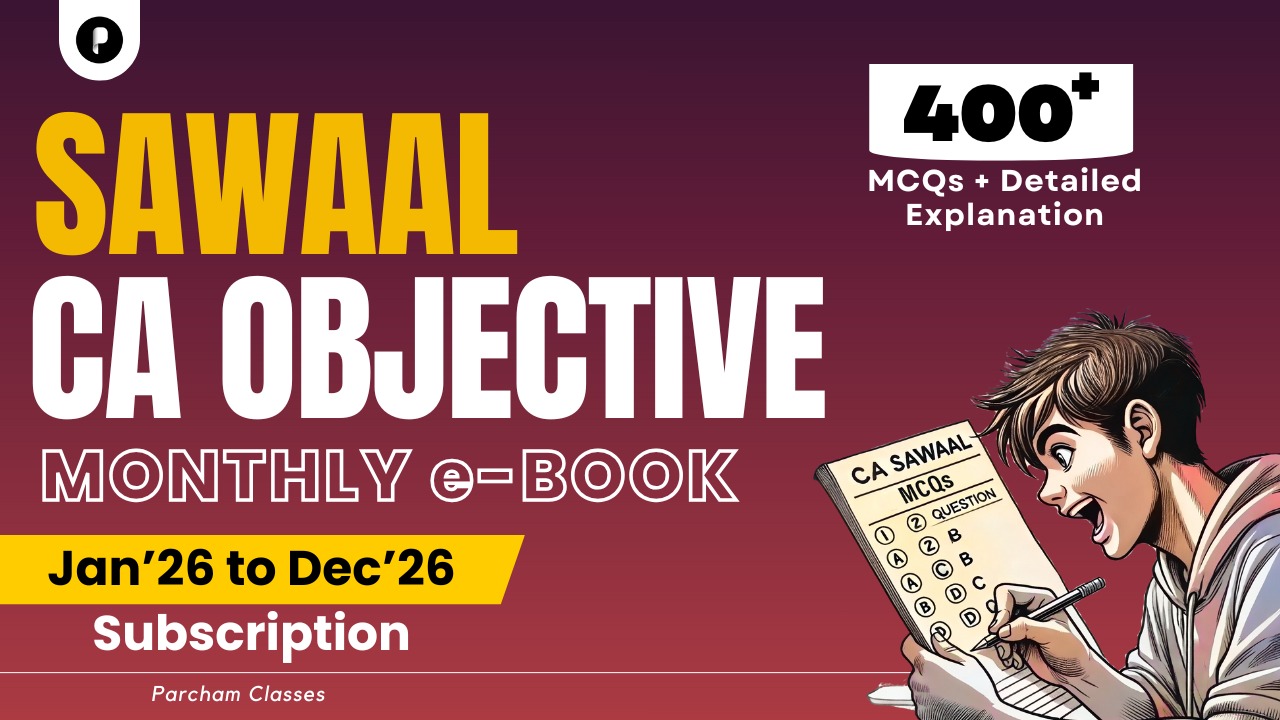
Sawaal CA Objective Monthly E-book (Jan'26 to Dec'26)
400+ MCQs with detailed explanations every month — the cleanest way to convert current affairs reading into Paper 1 marks.
Detailed syllabus
General Intelligence & Reasoning (Paper 1)
Analogies, Similarities, Differences, Space Visualisation, Problem Solving, Analysis, Judgment, Decision Making, Visual Memory, Discrimination, Observation, Relationship Concepts, Arithmetical Reasoning, Verbal and Figure Classification, Arithmetical Number Series, Non-verbal Series, Coding-Decoding.
General Awareness (Paper 1)
Current events, India and its neighbouring countries — History, Culture, Geography, Economic Scene, General Polity, Indian Constitution, Scientific Research, Sports, Books and Authors, Important Dates and Events.
General Engineering — Civil (Paper 1 and Paper 2)
Building Materials, Estimating, Costing and Valuation, Surveying, Soil Mechanics, Hydraulics, Irrigation Engineering, Transportation Engineering, Environmental Engineering, Theory of Structures, Concrete Technology, RCC Design, Steel Design.
General Engineering — Mechanical (Paper 1 and Paper 2)
Theory of Machines and Machine Design, Engineering Mechanics and Strength of Materials, Properties of Pure Substances, 1st and 2nd Laws of Thermodynamics, Air Standard Cycles for IC Engines, IC Engine Performance, IC Engine Combustion, IC Engine Cooling and Lubrication, Rankine Cycle, Boilers, Air Compressors, Refrigeration Cycles, Principle of Refrigeration Plant, Nozzles and Steam Turbines, Properties and Classification of Fluids, Fluid Statics, Fluid Kinematics, Dynamics of Ideal fluids, Hydraulic Turbines, Centrifugal Pumps, Classification of steel.
General Engineering — Electrical (Paper 1 and Paper 2)
Basic Concepts, Circuit Law, Magnetic Circuit, AC Fundamentals, Measurement and Measuring Instruments, Electrical Machines (DC, Synchronous, Induction, Single Phase Motors), Generation, Transmission and Distribution, Estimation and Costing, Utilisation of Electrical Energy, Basic Electronics.
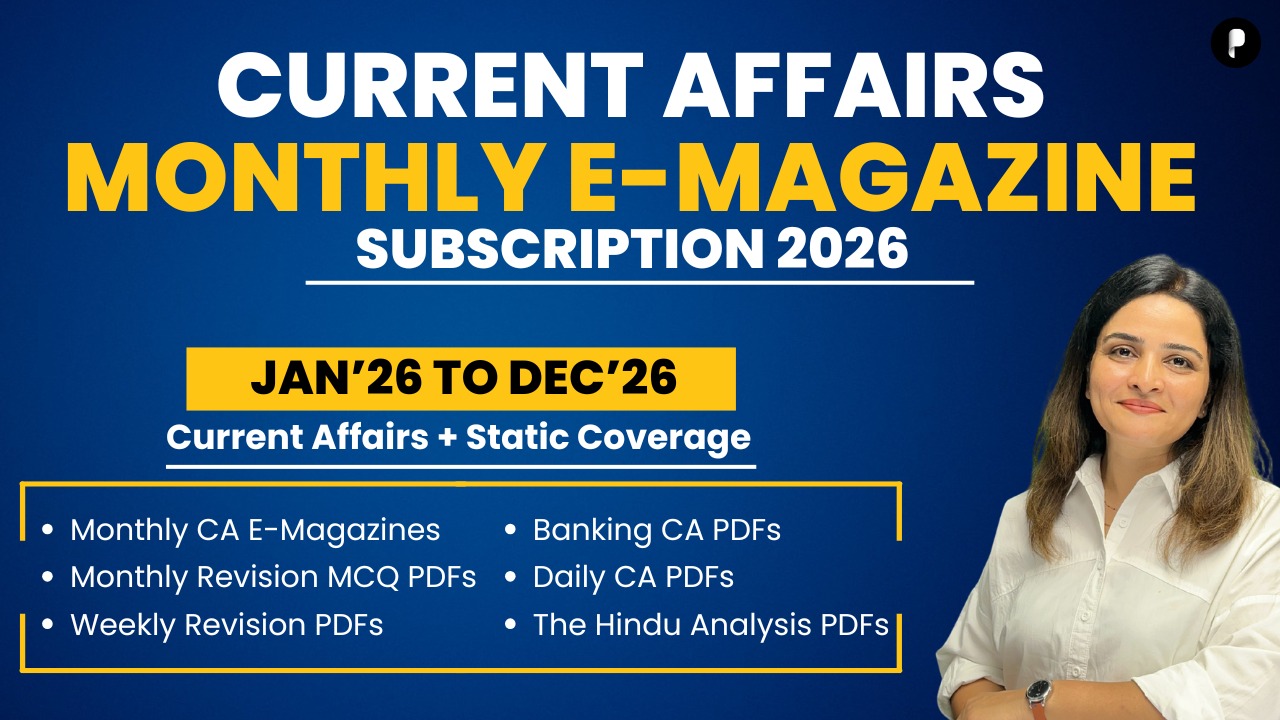
Current Affairs Monthly E-magazine Subscription 2026
Monthly CA e-magazines, revision MCQ PDFs, weekly revision PDFs, banking CA PDFs, daily CA PDFs & Hindu analysis — everything for Paper 1 GA.
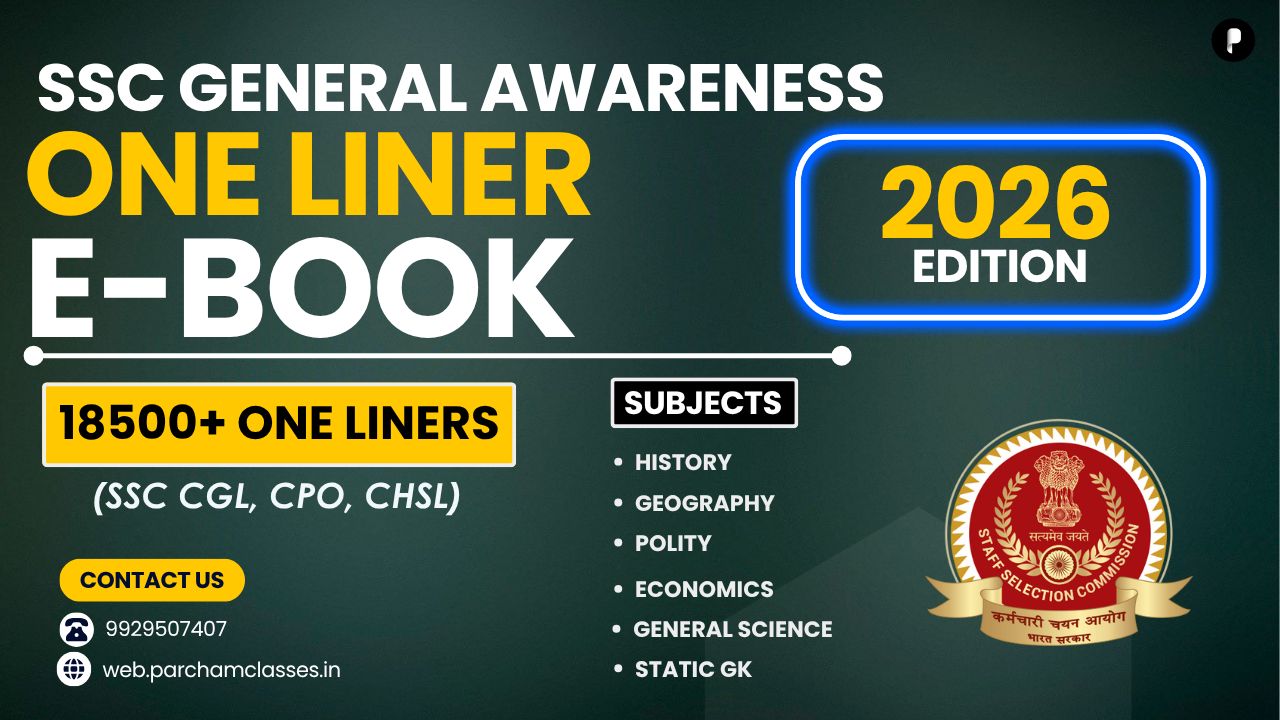
SSC One Liner E-Book
Your last-30-days revision tool for the non-engineering portion. Use saved time for engineering subject revision.
Disciplines & recruiting departments
Per the SSC JE 2025 Official Notification, recruitment is across the following key departments:
| Department | Disciplines Recruited |
|---|---|
| Central Public Works Department (CPWD) | Civil, Electrical (Age limit: up to 32 years) |
| Border Roads Organisation (BRO) | Civil, Electrical, Mechanical (MALE candidates only per official notification) |
| Central Water Commission (CWC) | Civil, Mechanical |
| Military Engineer Services (MES) | Civil, Electrical, Mechanical |
| Farakka Barrage Project (FBP) | Civil, Electrical, Mechanical |
| Central Water and Power Research Station | Civil |
| Department of Posts | Civil, Electrical (varies by year) |
| Other Government Departments | As per the official notification each year |
SSC One Liner E-Book
Years of static GK compressed into one-liner format — the perfect last-mile resource for the final stretch before exam day.
How to apply
Application fee
| Category | Application Fee |
|---|---|
| General / OBC / EWS (Male candidates) | Rs. 100 |
| All Women Candidates (any category) | EXEMPTED — Rs. 0 |
| SC / ST | EXEMPTED — Rs. 0 |
| PwBD (Persons with Benchmark Disability) | EXEMPTED — Rs. 0 |
| Ex-Servicemen (ESM) eligible for reservation | EXEMPTED — Rs. 0 |
SSC Regional & sub-regional offices
| Region | HQ | States / UTs | Website |
|---|---|---|---|
| Northern Region (NR) | New Delhi | Delhi, Rajasthan, Uttarakhand | sscnr.nic.in |
| Central Region (CR) | Prayagraj | Bihar, Uttar Pradesh | ssc-cr.org |
| Eastern Region (ER) | Kolkata | A&N Islands, Jharkhand, Odisha, Sikkim, West Bengal | sscer.org |
| Southern Region (SR) | Chennai | Andhra Pradesh, Puducherry, Tamil Nadu, Telangana | sscsr.gov.in |
| Western Region (WR) | Mumbai | Goa, Gujarat, Maharashtra, DNH&DD | sscwr.net |
| Karnataka Kerala (KKR) | Bengaluru | Karnataka, Kerala, Lakshadweep | ssckkr.kar.nic.in |
| North Eastern (NER) | Guwahati | Arunachal Pradesh, Assam, Manipur, Meghalaya, Mizoram, Nagaland, Tripura | sscner.org.in |
| North Western (NWR) | Chandigarh | Chandigarh, Haryana, HP, J&K, Ladakh, Punjab | sscnwr.org |
| Madhya Pradesh (MPR) | Raipur | Chhattisgarh, Madhya Pradesh | sscmpr.org |
SSC Static GK Batch 2026–27
History, Polity, Geography, Economics & Science taught from scratch — the foundation for JE Paper 1 GA.
SSC + Railway Mega Combo 2026–27
Crack SSC JE, CGL, CHSL, MTS, GD AND all major Railway exams with one complete batch. Maximum savings.
Selection process
200 questions, 200 marks, 2 hours. Includes General Intelligence/Reasoning, General Awareness, and General Engineering.
100 questions on General Engineering (chosen discipline), 300 marks, 2 hours. Final merit based on Paper 1 + Paper 2.
Submit original Engineering Degree / Diploma, Class 10 / 12 marksheets, category certificate, photo ID.
Per merit-cum-preference basis. Appointment letters issued by respective Departments and Ministries.
Preparation tips from Parcham Classes
Don't Skip Non-Engineering Sections
Out of 200 marks in Paper 1, 100 marks come from General Intelligence and General Awareness. Engineering aspirants often under-prepare these sections — this is the easiest 100 marks you can score.
Master General Awareness — Your Scoring Section
The SSC General Awareness Batch by Parcham Classes combined with the SSC Static GK Batch covers History, Polity, Geography, Economics, and Science systematically. For the dynamic portion, the Current Affairs Complete Kit by Parcham Classes gives you year-long coverage.
Solve Previous Year Questions for GA
The SSC General Awareness PYQ E-Book (2017-2025) by Parcham Classes reveals exactly which GA topics SSC repeats across CGL, CHSL, and JE. Engineering students often skip this — don't.
NCERT Foundation for Reasoning & Mathematics
The NCERT Advanced Batch by Parcham Classes strengthens Class 9-12 fundamentals that feed directly into JE Paper 1's Reasoning and Quantitative sections. Even engineering graduates benefit from this revision.
Engineering Concepts Over Memorisation
JE exam tests engineering thinking, not memorisation. Use your college textbooks (the ones you actually understood) plus standard JE-prep books for revision. For engineering subject preparation, supplement with discipline-specific resources beyond Parcham's offerings.
Solve at Least 10 Years of Previous Year Questions
SSC JE PYQs reveal patterns no syllabus can teach. Last 10 years' questions show which topics SSC repeats, which formulas are tested most, and which concepts are favourites. This is the highest-return activity for JE engineering papers.
Paper 2 — Selective Attempt Strategy
Each Paper 2 question is worth 3 marks with 1 mark negative. Wrong attempts cost 4 marks each. Answer only what you're 90% confident about. Aiming for 250+ with high accuracy beats blindly attempting 100 questions.
Quick Revision for GA in the Final Month
The SSC One Liner E-Book by Parcham Classes is your last-30-days revision tool for the non-engineering portion. Use the saved time for engineering subject revision.
Frequently asked questions
Explore more Parcham resources
Get the Comprehensive Batch →Crack SSC JE 2026
with Parcham Classes
Expert faculty, structured study plans, daily current affairs, weekly full mock tests, NCERT foundation, and personalised mentoring — everything you need to score the non-engineering 100 marks and get selected.
Disclaimer & Source Citation
This document has been prepared by Parcham Classes based exclusively on official sources:- SSC JE 2025 Official Notification (released 30 June 2025)
- SSC Tentative Calendar of Examinations 2026–27
- Staff Selection Commission Official Website (ssc.gov.in)
- 7th Pay Commission rules, Ministry of Finance and DoP&T orders